
Inside Japan’s Food Manufacturing Industry: Market Size, Key Players, and Future Trends
- Mar 9
- 2 min read
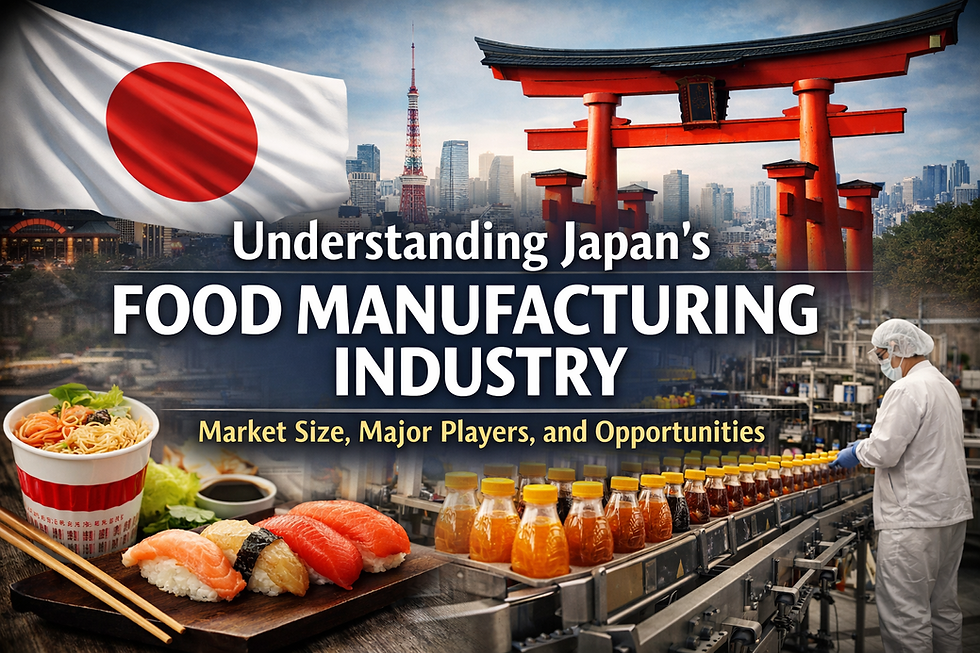
Japan has one of the largest and most sophisticated food industries in the world. The country’s food market is estimated to be worth around USD 380–435 billion, making it one of the most attractive food markets globally. Demand remains stable due to strong domestic consumption, high food quality standards, and a well-developed retail and distribution system.
Within this ecosystem, the food manufacturing sector plays a central role. Japan’s food processing industry alone produces more than USD 170 billion worth of products annually, supplying supermarkets, convenience stores, restaurants, and export markets. Food manufacturing is also one of the largest manufacturing sectors in Japan in terms of employment and production value.
One defining characteristic of Japan’s food industry is its extremely high standards for quality and safety. Japanese consumers place strong emphasis on freshness, traceability, and consistent taste. As a result, food manufacturers operate under strict regulations and advanced quality control systems. These expectations have helped Japanese food brands build strong trust both domestically and internationally.
Another important feature of the industry is its focus on innovation and convenience. Japan is widely known for its ready-to-eat meals, convenience store food culture, and packaged products that combine high quality with practicality. Products such as instant noodles, packaged rice dishes, and frozen meals have become part of everyday life in Japan.
At the same time, demographic changes are influencing product development. Japan has one of the world’s most rapidly aging populations, which is increasing demand for health-focused foods, functional ingredients, and easy-to-consume products. Food manufacturers are increasingly investing in nutritional products, supplements, and foods designed specifically for elderly consumers.
Several structural trends are shaping the future of the industry:
Growth of convenience and ready-to-eat foods
Rising demand for health and wellness products
Increasing interest in premium and high-quality ingredients
Expansion of Japanese food exports as global demand for Japanese cuisine continues to rise
The Japanese food manufacturing industry is also supported by several large and globally recognized companies. Some of the most representative players include:
Ajinomoto Co., Inc. – A global leader in seasonings, processed foods, and amino-acid technology. Meiji Holdings – Known for dairy products, chocolate, and nutritional foods. Nissin Foods Holdings – The pioneer of instant noodles and the creator of Cup Noodles. Yamazaki Baking Co. – One of Japan’s largest bread and packaged bakery manufacturers. NH Foods Ltd. – A major meat processing and food products company. Kikkoman Corporation – Famous worldwide for soy sauce and seasoning products.
Yakult Honsha – Known globally for probiotic beverages and functional health products.
These companies demonstrate how Japanese food manufacturers combine tradition, advanced technology, and global branding to remain competitive both domestically and internationally.
Looking ahead, the Japanese food manufacturing sector is expected to continue evolving. Companies are increasingly investing in automation, food technology, sustainable production, and international expansion. As Japanese cuisine gains popularity worldwide, the industry is likely to play an even greater role in global food markets.
For international companies and investors, Japan’s food industry offers a unique combination of large market size, sophisticated consumers, and strong innovation capabilities.
If you are interested in Japan’s food industry or expanding into the Japanese market, learn more about Japan market entry support through YK Bridge.


Comments