A foreign B2B startup decides Japan looks promising. The natural first move is to hire a country manager. A senior, bilingual leader with enterprise relationships. Pay $200,000-$250,000 a year, give them six months to ramp up, and the Japan engine should start.
The math, on paper, looks reasonable. In practice, it is almost always wrong.
The visible cost: $250k
Top-tier bilingual GTM leaders in Tokyo earn roughly that, plus performance bonuses. That is the headline number, and the number that lands in the budget spreadsheet.
What you also pay for
- Search fees: A retained executive search for a Japan CM rarely lands under $40,000–$60,000.
- Benefits and statutory cost: Japan's social insurance, pension, and health contributions add roughly 15-18% on top of salary.
- Onboarding: 3-6 months of ramp time during which output is low and meetings are exploratory.
- Severance risk: Japanese labor law strongly protects employees. If the hire is not the right fit, exiting them legally is slow, expensive, and damaging to your reputation in a market where reputation compounds.
- Founder time: The CEO will spend a non-trivial portion of every week supporting the new CM, especially in Year 1.
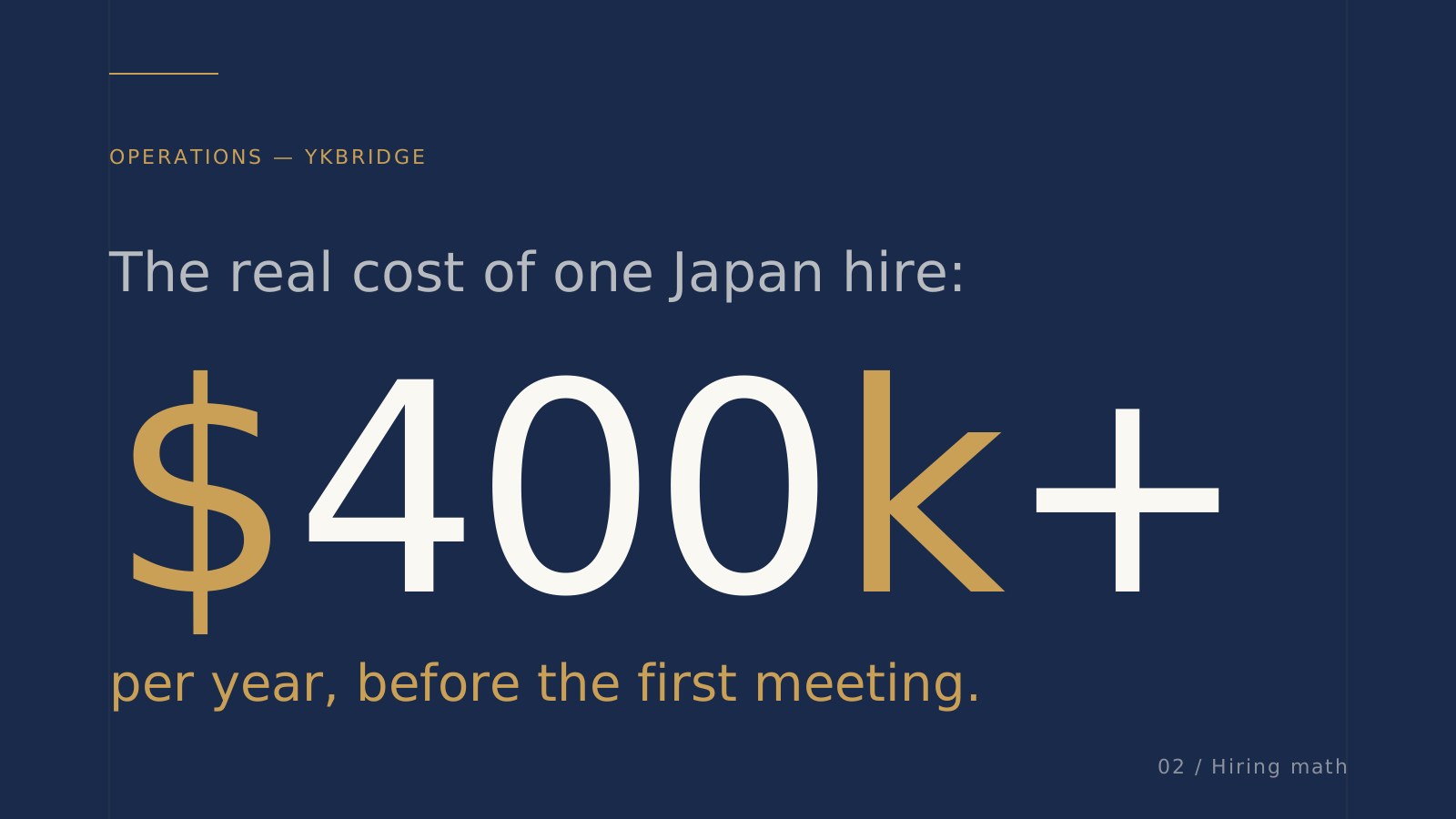
Stack all of this, and a $250k salary becomes a $400k+ all-in commitment before the first real meeting is booked.
The risk that does not appear in budgets
The biggest cost is not financial. It is structural. A full-time CM hire is a single bet on a single person, made before the market has been validated.
If the market does not respond — if the timing is wrong, if the ICP needs refining, if the regulatory landscape shifts — you cannot easily unwind the bet. The CM is locked in. The brand is committed. The team has been told Japan is launching.
What changes with embedded service
The embedded model exists precisely because the traditional hire is over-determined.
A senior embedded operator at YKBridge starts at $6,000–$8,000 a month. Pause-able. Tier-changeable. Backed by a specialist team. Day-1 ready.
If the market does not respond, you scale down. If the market accelerates, you scale up. The risk is bounded; the upside is unbounded. That is what "first revenue at a fraction of the risk" actually means in practice.